


For most people, a road accident is a moment they want to forget. For Ilias Kanchan, it became the beginning of a life he never planned.
The actor was already a major star in Bangladesh when he had his first serious encounter with death on the road.
It was 1989. His film career was at a high point, and Beder Meye Josna had made him a household name. Then, one rainy night, a sudden attempt to save a rickshaw-van changed the course of his life.
Source: IMDbKanchan was driving when he saw the vehicle ahead. He tried to avoid it. His car skidded on the wet road and collided with a bus. The injuries were severe. He suffered multiple fractures and damage to his hand, and doctors reportedly considered amputation before he was eventually taken to Singapore for treatment.
He survived. But the accident stayed with him.
During his recovery, Kanchan began thinking about what could turn an ordinary journey fatal. A vehicle without proper lighting. A driver without adequate training. A badly designed road. A moment of carelessness. None of these seemed inevitable to him. They were things that could, at least in principle, be changed.
He did not know then that a much greater personal loss was waiting for him.
Four years later, on 22 October 1993, his wife, Jahanara Kanchan, was travelling to Bandarban while he was away shooting a film. She died in a road accident. There was no easy way back from that.
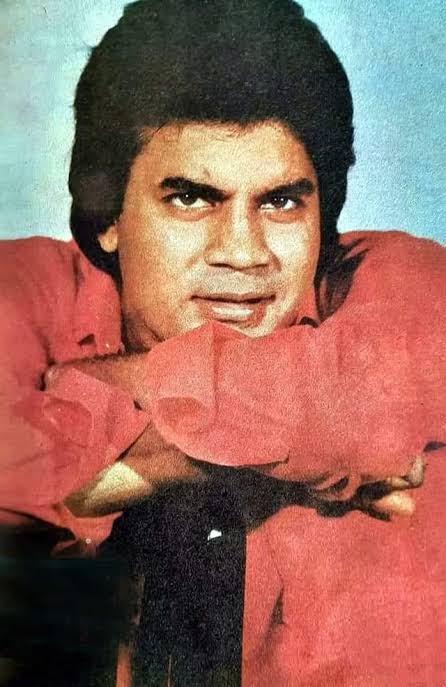
Kanchan was at a point in his career when most actors would have been thinking about bigger films, more success and the next stage of their public lives. Instead, he found himself thinking about death.
He considered leaving the film industry. The world that had once seemed so important suddenly felt strangely small.
Then his grief took another direction.
He began asking himself what could be done so that another family would not have to experience the same loss.
On 1 December 1993, Kanchan founded Nirapad Sarak Chai, "We Demand Safe Roads."
The name was simple. The task was not.
At the time, road safety was hardly a cause that could guarantee attention.
Bangladesh had plenty of traffic problems, but public discussion often stopped at blaming an irresponsible driver after an accident. Road deaths were frequently accepted as an unfortunate part of everyday life.
Kanchan wanted to challenge that acceptance.
He used the one thing he already had in abundance, public attention.
As a film star, he could draw crowds and make people listen.
But he gradually moved beyond the role of celebrity spokesperson. He took the campaign to streets, rallies, meetings and awareness programmes.
He spoke about drivers, pedestrians, vehicles and roads. He kept returning to the same basic idea: a death on the road should not automatically be treated as fate.
That was an important shift.
A driver can be responsible for a crash, but the story does not necessarily begin with the driver. How was the licence obtained? Was the driver properly trained? Was the vehicle fit to be on the road? Was the road itself designed safely? Was there adequate enforcement? Could the pedestrian have crossed safely? Kanchan's movement tried to bring those questions into the public conversation.
He also had to persuade people who did not necessarily see road safety as a shared responsibility. For transport workers, new regulations could feel like a threat to their livelihood.
For ordinary pedestrians, road safety could seem like something that depended entirely on drivers. For governments, it was a problem spread across several agencies.
The movement therefore had to keep explaining the same uncomfortable truth: safer roads require changes in behaviour, but they also require functioning systems.
Over the years, Nirapad Sarak Chai organised rallies, discussions, awareness campaigns and training programmes.
Kanchan continued to speak publicly about driver education, licensing, vehicle fitness, pedestrian safety and enforcement.
His campaign also changed his own public identity. He was no longer only the actor audiences knew from the cinema. He became the man associated with a cause that had begun with the death of his wife.
That connection was made official in 2017, when the government declared 22 October National Road Safety Day.
The date of Jahanara Kanchan's death became a day of national attention to the issue he had spent decades campaigning about.
It was a striking transformation. A day that had once meant only personal grief for one family had become part of the country's public calendar.
Yet recognition did not solve the problem.
Bangladesh's roads remain dangerous. Reckless driving, unfit vehicles, weak enforcement, unsafe road design and poor awareness continue to contribute to crashes.
Kanchan has repeatedly argued that legislation by itself cannot make roads safe. Rules must be enforced, drivers must be trained, and the road system must be designed around human safety rather than simply moving vehicles.
That persistence is perhaps the most remarkable part of his story.
Celebrity campaigns often disappear when public attention moves elsewhere. Kanchan's did not. His motivation was too personal for that. Every accident carried a memory of the one that changed his own life. Every grieving family offered a reminder of the wife he could not save.
There is something almost ironic about the fact that Kanchan became famous by playing heroes on screen, only to spend the later part of his public life fighting a much less glamorous battle in the real world.
There are no dramatic background scores on a highway. No carefully written dialogue. No second take.
There is only a driver, a pedestrian, a vehicle, a road—and the possibility that a single mistake can change several lives at once.
Kanchan knows that possibility better than most.
He knows what it feels like to survive a crash. He knows what it means to wait for someone who will never come home. And he knows that grief, by itself, changes nothing.
So he turned his grief into a question, and then into a movement.
More than three decades after Nirapad Sarak Chai began, that movement remains unfinished. Perhaps it will always be unfinished. Roads change, vehicles change, laws change, and new generations of drivers and pedestrians arrive.
But the reason Kanchan started remains painfully simple. He lost his wife on a road. He did not want other people to lose theirs.
