


Many of us remember Ishaan from Taare Zameen Par, the boy labelled stupid, punished for failure, sent away for not being able to read, until one teacher looked closely enough to see what was actually happening.
In Bangladesh, that teacher rarely arrives. For most dyslexic children here, the story does not end with a breakthrough. It ends with a child who grows up believing they were not smart enough.
From firsthand experience of tutoring students with dyslexia, what becomes immediately clear is how long these children carry a label they never deserved.
Utsho, a primary grade student, confused b and d, skipped letters mid-word, added letters that did not exist, and read English words in ways that bore little resemblance to what was on the page. His parents knew something was off but could not name it. When the issue was raised, and Taare Zameen Par was referenced as a way to help them understand, they rewatched the movie and immediately recognised their son in it. Within weeks, they had found a psychiatrist and a speech therapist. Utsho is doing better now.
Not every child gets that response. Aquib, a class-9-student whose dyslexia had gone unaddressed for years, presented the same symptoms but more severely.
Reading a single sentence exhausted him visibly. He would finish a line, reach for water, catch his breath, and begin again.
Material covered in one session would disappear by the next unless continuously revisited. His parents had never considered that a condition might be behind his struggles. Like so many Bangladeshi parents, they had concluded their son was lazy, weak, and uninterested.
When the issue was raised, their reaction was immediate and frightened. "We thought he was just weak in studies. When we heard there might be a condition, our first thought was that he had a mental illness. We were scared for his future."
It took considerable time to calm them, explain that dyslexia is common and treatable, and outline what steps were available. They said they would look into it. Gradually, they did not. The tutoring eventually ended.
A fellow tutor shared a nearly identical experience. The child she taught had the same profile: misread words, letter reversals, the exhausting effort of a task that others find effortless.
The parents refused to engage. Their child was not struggling, they insisted. He did not try. The tutor kept showing up, kept teaching, while both she and the child quietly carried the weight of something that had no name in that household.
What is actually happening
Dyslexia is a neurodevelopmental condition that affects how the brain processes language and reading.
It has nothing to do with intelligence, vision, or hearing. Children with dyslexia typically have average or above-average intelligence but face specific difficulties with decoding words, spelling, and reading fluency.
It is lifelong but manageable, and with early identification and appropriate support, children can develop effective reading skills and reach their full potential.
Suraiya Islam Munni, a psychologist with over seven years of clinical experience currently working at Proyash Institute of Special Education, describes dyslexia as a spectrum condition whose presentation varies from child to child. "While dyslexia primarily affects reading, without appropriate support it can also impact academic performance, school participation, self-confidence, social relationships, and emotional well-being, increasing the risk of anxiety and depression," she explains.
Globally, between 5 and 15 per cent of school-aged children are estimated to have a specific learning disorder, with dyslexia accounting for roughly 80 per cent of those cases.
In Bangladesh, the most comprehensive local study, conducted in Dhaka in 2015, found a 9.02 per cent prevalence rate among fourth-grade primary students.
A 2024 study by researcher Md. Sahajalal Badsha explored support strategies for Bengali primary students with dyslexia but stopped short of providing updated prevalence data. No nationwide registry exists, and no large-scale screening has been conducted since.
The research silence is itself telling. Dyslexia affects males and females equally. What may account for the common perception that boys are more affected is that girls with dyslexia more often go unnoticed and undiagnosed.
Parents' response
Munni describes the parental response to a dyslexia diagnosis through the lens of the grief cycle.
Parents move through denial, anger, bargaining, depression, and eventually acceptance, though not always in order and not always to completion.
The denial stage, the belief that the child is simply a late reader or a lazy student who will eventually sort themselves out, is where most Bangladeshi parents remain for far too long.
"In Bangladesh, many parents do not seek a comprehensive developmental or psychological assessment because most children with dyslexia have average intelligence, age-appropriate daily living skills, and no visible physical disability," Munni notes.
"As a result, these children often remain in mainstream schools without being identified."
When dyslexia goes unidentified through the school years, the academic gaps compound. A child who cannot decode words fluently falls behind in every subject that requires reading.
By secondary school, the damage is layered, not just in academic performance but in self-perception. The child has by then absorbed years of being called slow, careless, or simply not capable. The emotional damage can outlast the learning difficulty itself, and in many cases it does.
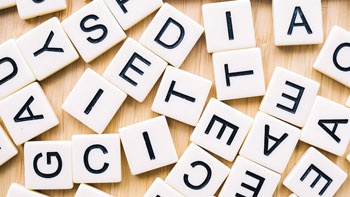
What can be done
Dyslexia is diagnosed through a comprehensive psychological assessment covering reading and language skills, developmental history, and cognitive functioning. Once identified, the path forward involves structured reading intervention, classroom accommodations, speech and language therapy, and emotional support to address the anxiety and low self-esteem that frequently develop alongside the condition. Early diagnosis makes each of these interventions significantly more effective. The younger the child when support begins, the less ground there is to make up.
"To normalise dyslexia in Bangladesh, we need to increase awareness that it is a neurodevelopmental condition, not a sign of low intelligence, laziness, or poor parenting," Munni says.
"Early identification, timely assessment, and evidence-based educational support should become more accessible. Teachers need training to recognise the early signs. Schools, professionals, parents, and the media all have an important role in reducing stigma.
There is no national screening programme, no mandatory teacher training to identify early signs, and no policy framework that recognises dyslexia as a condition requiring educational accommodation. Private institutions and individual specialists are filling the gap. Still, their reach is limited, and their costs place them beyond many families.
What Bangladesh needs is not just awareness campaigns but structural change: screening built into primary school entry, teacher training embedded into teacher education programmes, and a policy environment that recognises learning differences as a legitimate educational responsibility rather than a private family problem.
The children who need that change are already in classrooms across the country. Some of them are being called lazy today, while some are being punished for not trying. And some are simply waiting for someone to look closely enough to see what is actually there.
tajree.m.rahman@gmail.com
