


As Bangladesh approaches a crucial national election, young people across the country are raising their voices with renewed urgency in the face of escalating climate impacts. Their message is clear: climate justice, gender equality, and meaningful youth participation must be placed at the center of political decision-making.
From coastal Barishal to the hilly regions of Bandarban, students and young rights activists have come together under the initiative “Generation Green: Voices for Climate Resilience.” They are calling on political parties to move beyond symbolic promises and include concrete, gender-responsive climate actions in their election manifestos.
Implemented by Manusher Jonno Foundation with financial support from the Embassy of Sweden, the initiative aimed to amplify the voices of young people particularly young women from climate-vulnerable regions and bring their concerns into policy dialogue ahead of the 13th National Parliamentary Election.
As part of the Generation Green initiative, young people jointly presented a set of policy proposals prioritizing climate resilience, women’s safety, and youth leadership.
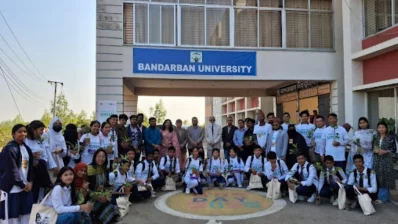
The campaign was carried out through a series of dialogues and awareness activities at four public universities University of Barishal, Begum Rokeya University (Rangpur), Bangladesh Agricultural University (Mymensingh), and Bandarban University representing coastal, flood-prone, agricultural, and hilly regions.
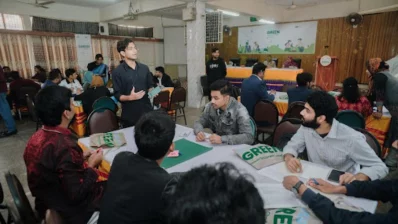
Each campus engagement brought together students, teachers, journalists, youth leaders, and representatives of political parties. Through panel discussions and cultural activities, participants raised demands related to climate adaptation, women’s safety, prevention of child marriage, and youth participation in decision-making.
A key outcome of the initiative was the submission of a memorandum to political parties, calling for climate-resilient infrastructure in vulnerable regions, access to safe water and sanitation during disasters, stronger protection mechanisms for women and children, strict enforcement of laws against violence and child marriage, and the institutionalization of youth participation in policymaking.
“Women are the most vulnerable during disasters. Without women-friendly planning in shelters and rehabilitation systems, climate resilience cannot be achieved,” said a university student.
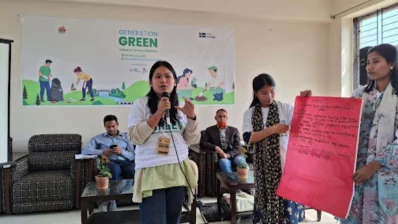
“Women in the hill tracts face double vulnerability. Existing laws are not enough-what is urgently needed is strict enforcement, accountability, and concrete measures to ensure women’s safety.” said a student from Bandarban University.
“Ending child marriage requires mandatory age verification during marriage registration and the effective operation of reporting hotlines,” said a student from the University of Barishal.
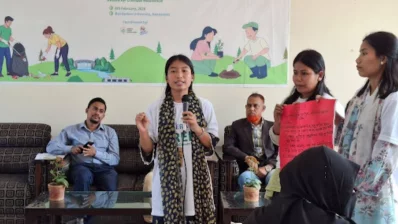
“Equal property rights for women in the hill tracts must be ensured without delay.” said a female student.
“Environmental education, climate change, and gender equality must be integrated into school and college curriculum,” said a student from Bandarban Collector School and College.
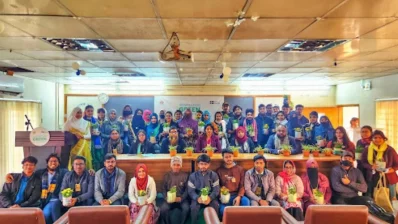
The Generation Green initiative directly engaged approximately 5,000 young people through campaigns, awareness activities, and university-based events. It also achieved significant visibility through national and local print, broadcast, and digital media coverage, while social media platforms played a vital role in amplifying youth voices beyond university campuses.
As Bangladesh moves toward a critical electoral moment, the message from young people is clear: climate resilience, women’s safety, and social justice are deeply interconnected and cannot be addressed in isolation.
By centering youth leadership particularly that of young women the Generation Green campaign has reinforced the need for political accountability and action. Young citizens are calling on political parties to translate commitments into policies, budgets, and enforcement mechanisms that reflect the realities of climate-vulnerable communities.
With the future at stake, they argue, meaningful and sustainable change will only be possible if political leaders listen to and act upon the voices of the next generation.
Charu Sikder is the project officer of CREA, Manusher Jonno Foundation
